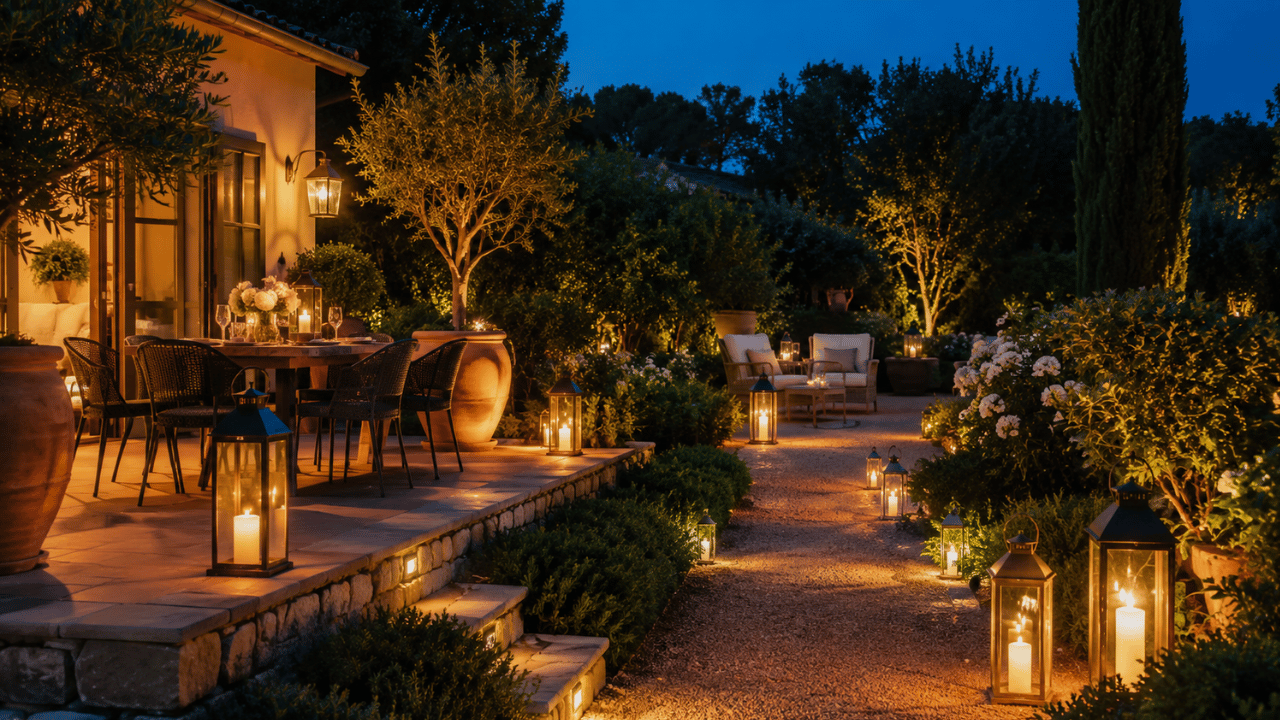
A garden does not stop being part of the home when the sun goes down. In fact, evening is often when an outdoor space becomes most enjoyable. The air feels cooler, the atmosphere grows quieter, and a terrace or garden can become the perfect place to share a meal, read a book, or simply unwind.
Lighting plays a major role in that transformation. Bright floodlights may provide visibility, but they rarely create a welcoming mood. Outdoor lanterns offer a softer and more decorative alternative. Their warm glow adds depth to the garden, highlights carefully chosen areas, and makes outdoor spaces feel more intimate without requiring a complete redesign.
Creating a Warm and Inviting Outdoor Atmosphere
One of the greatest advantages of lanterns is the quality of light they provide. Unlike harsh overhead lighting, lanterns create small pools of illumination that make a space feel calm and comfortable.
A lantern placed beside an outdoor sofa can make the seating area feel more inviting. Several models arranged around a dining table can create the atmosphere of an intimate outdoor restaurant. Smaller lanterns positioned on steps, low walls, or side tables add gentle points of light throughout the garden.
The goal is not necessarily to illuminate every corner. Leaving certain areas darker creates contrast and makes the lanterns stand out. This balance between light and shadow gives the garden a more natural, elegant appearance after sunset.
Using Lanterns to Structure the Garden
Outdoor lighting can also help define the different areas of a garden. During the day, plants, furniture, pathways, and architectural features naturally organize the space. At night, many of these details disappear unless they are illuminated.
Lanterns can guide the eye and restore that structure. A row of lanterns along a garden path creates a clear visual direction while making the route easier to follow. Two larger lanterns near an entrance can frame a doorway and provide a welcoming first impression.
On a terrace, lanterns can mark the boundary between the dining area and a more relaxed seating zone. They can also draw attention to a water feature, a mature tree, a flower bed, or an attractive stone wall.
Homeowners looking for carefully selected outdoor lanterns for gardens and patios can combine several sizes and styles to create a layered lighting arrangement rather than relying on a single central light source.
Choosing Between Floor, Table, Wall, and Hanging Lanterns
The right type of lantern depends on both the available space and the effect you want to create.
Floor Lanterns
Large floor lanterns work particularly well near entrances, outdoor sofas, garden steps, and patio doors. Their size gives them a strong decorative presence, even when they are not illuminated.
Grouping two or three floor lanterns of different heights can create an attractive focal point. For a balanced result, use models that share a similar color, material, or design language.
Table Lanterns
Smaller lanterns are ideal for dining tables, coffee tables, benches, and low garden walls. They bring light closer to eye level and help create a more intimate atmosphere.
When used on a dining table, lanterns should provide enough light to enhance the setting without blocking conversation or taking up too much space.
Wall Lanterns
Wall-mounted lanterns are a practical option for entrances, balconies, terraces, and exterior walls. They save floor space and can provide consistent lighting around doors or seating areas.
Their finish should complement nearby architectural details such as door frames, window frames, railings, or outdoor furniture.
Hanging Lanterns
Hanging lanterns can make a covered terrace, pergola, or balcony feel especially atmospheric. Positioned above a table or seating area, they create a defined zone while adding vertical interest.
Paper lanterns and lightweight decorative models are particularly effective for summer gatherings and festive outdoor settings.
Solar Lanterns for Effortless Outdoor Lighting
Solar lanterns are a convenient choice for areas without easy access to electrical outlets. They can be placed along paths, among plants, beside seating areas, or in remote corners of the garden without the need for visible cables.
Many solar models charge during the day and illuminate automatically as daylight fades. Their performance depends on the amount of sunlight they receive, so they should normally be positioned in a bright, unobstructed location.
Solar lanterns are especially useful when flexibility matters. They can be moved as the garden layout changes, used for special occasions, or repositioned according to the season.
Selecting Materials That Suit the Setting
The material of a lantern influences both its appearance and its suitability for outdoor use.
Metal lanterns offer a timeless look and work well in modern, industrial, traditional, and rustic gardens. Black metal creates a strong graphic effect, while bronze or antique finishes add warmth and character.
Glass panels protect the light source while allowing the glow to remain clearly visible. Textured or tinted glass can soften the light and create subtle patterns.
Wood and bamboo introduce a more natural feeling and pair well with greenery, stone, and neutral outdoor textiles. Paper lanterns provide a lighter, more festive appearance, although they should only be used outdoors when their construction and conditions allow it.
Before placing any lantern outside permanently, it is important to check whether it is designed for outdoor exposure and suitable for the local weather conditions.
Decorating Balconies and Smaller Outdoor Spaces
Lanterns are not reserved for large gardens. They are often even more effective on balconies and compact terraces, where a few carefully positioned lights can transform the entire space.
A pair of lanterns beside a chair, one small model on a table, and a hanging lantern above can be enough to create a complete evening setting. Using fewer pieces with a consistent style generally looks more refined than filling a small area with too many decorations.
Mirrors, pale walls, glass surfaces, and light-colored textiles can also reflect the lantern glow and make a compact outdoor space feel brighter and more spacious.
A Simple Detail with a Strong Visual Impact
Transforming a garden after sunset does not always require permanent installations or a complicated lighting plan. Lanterns offer a flexible way to introduce warmth, depth, and personality.
By combining different heights, choosing materials that complement the surroundings, and placing light where people naturally gather, it is possible to create an outdoor setting that feels considered and inviting.
A well-positioned lantern does more than illuminate a space. It changes how that space is experienced, turning an ordinary terrace, balcony, or garden into a place where people naturally want to stay a little longer.